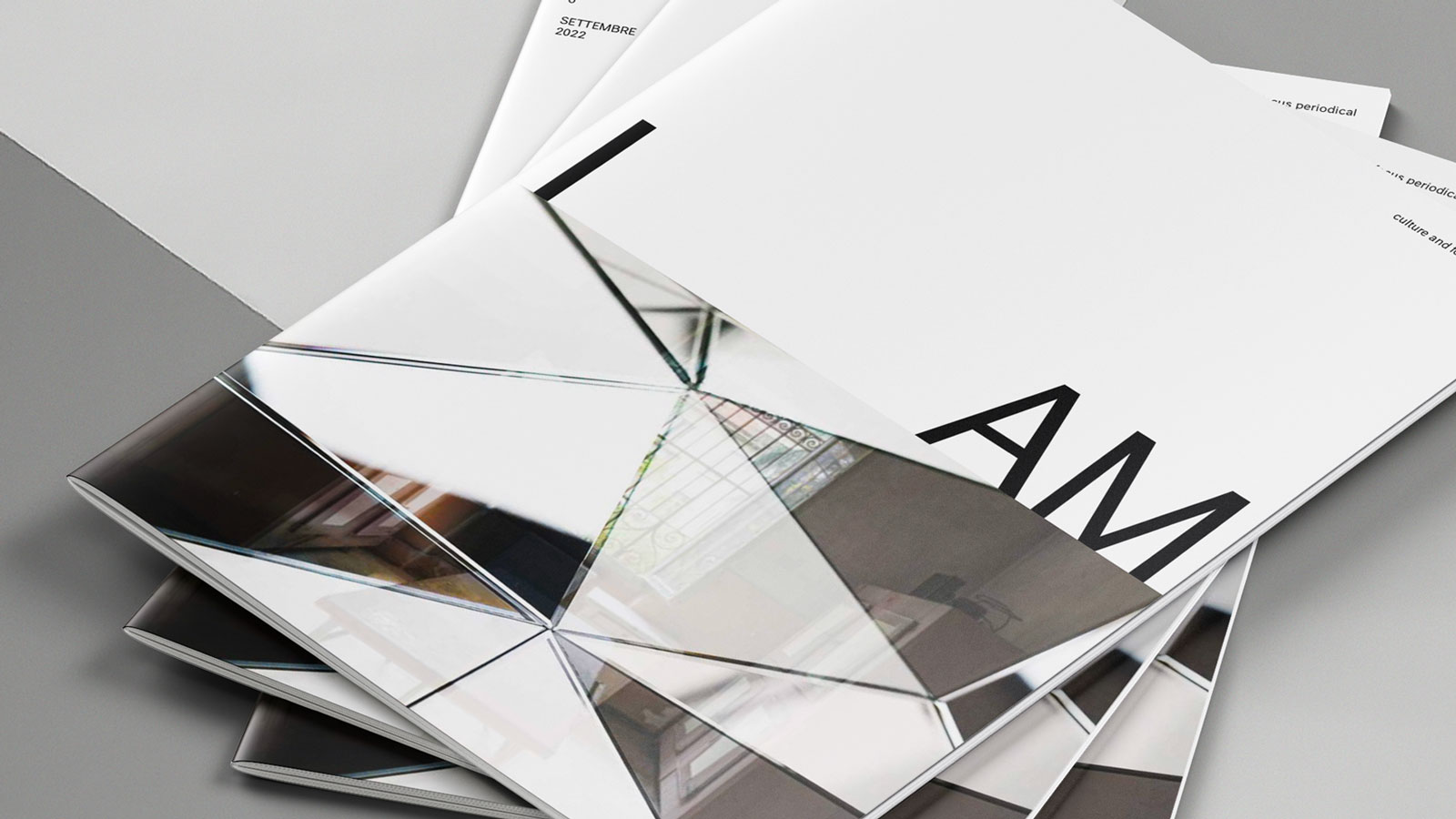
For the editorial in issue 11 of I AM Magazine, we met with architect Paolo Volpato, who shared his vision of future design, balancing the need for transformation and a return to the essence.
Current design is undergoing a profound transformation. Visual saturation and formal accumulation are being met by a quest for essentiality, which frequently leads to questions about where the value of design lies today and how it will develop in the future.
We have long been witnessing a "circular" system, in which trends and tendencies follow one another: first the return of the 1940s, then the 1950s, and so on, up to the rediscovery, reuse, and re-edition of pieces and influences from the 1960s, 1970s, and 1980s. These trends quickly lose their relevance.
I am thinking instead of essential and functional products, where light, color, and the use of noble and natural materials express a trend that is unlikely to fade. In my view, the value of contemporary design and its future development lies in the ability to subtract, to bring the project back to its essence.
The theme of "design without ornament" has always been dear to me, a theme that is part of a historical and critical reflection that has spanned design from Modernism to the present. Adolf Loos, in his famous essay "Ornament and Crime" (1908), denounced ornament as a superfluous expression, destined to age quickly and generate waste. With the Modern Movement, this position became a cardinal principle: eliminating decoration to prioritize function, clarity of dimensions, and sincerity of materials.
Today, a century later, the issue is being revisited from an ethical and ecological perspective. Subtraction does not mean impoverishment, but concentration: a language reduced to its bare essentials can express profound meanings. In an age of visual excess, sober design restores legibility, strengthens the relationship with the user, and affirms durability as an aesthetic and cultural value.
Paolo Volpato